Sustainability is no longer a side conversation. It is showing up in RFPs, procurement requirements, and client expectations across sports, live entertainment, and corporate events.
But there is still a disconnect.
Most conversations focus on materials, offsets, or messaging. Far fewer address what actually happens on site. How systems are installed, how they are removed, and what happens to thefm when the event is over.
That is where the real impact lives.
Sustainability Is an Operational Decision
At InProduction, sustainability in temporary infrastructure is not a feature. It is an operational decision.
The shift is straightforward: stop asking what something is made of and start asking how many times it will be used.
The most effective approach is not about one-time solutions. It is about building systems that can be deployed, recovered, and reused across events. That requires designing modular systems that can be reconfigured, prioritizing durability so materials hold up under repeated use, managing inventory so existing assets are deployed before new ones are ordered, and planning for teardown and recovery as early as install.
When those elements are aligned, sustainability becomes part of the workflow, not an add-on.
What Reuse Actually Looks Like
One of the clearest examples is mesh recycling.
Rather than treating mesh as disposable after an event, InProduction collects, processes, and reintroduces it into the system. The material matters, but the coordination behind it matters more. Recycling only works when it is planned into the project from the start and executed with consistency in the field.
This is what real-world sustainability looks like. Not abstract. Operational, repeatable, and built into how teams work across the full lifecycle of a project.
A System That Scales
The same principle applies across everything deployed.
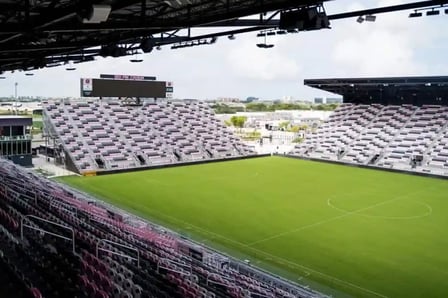
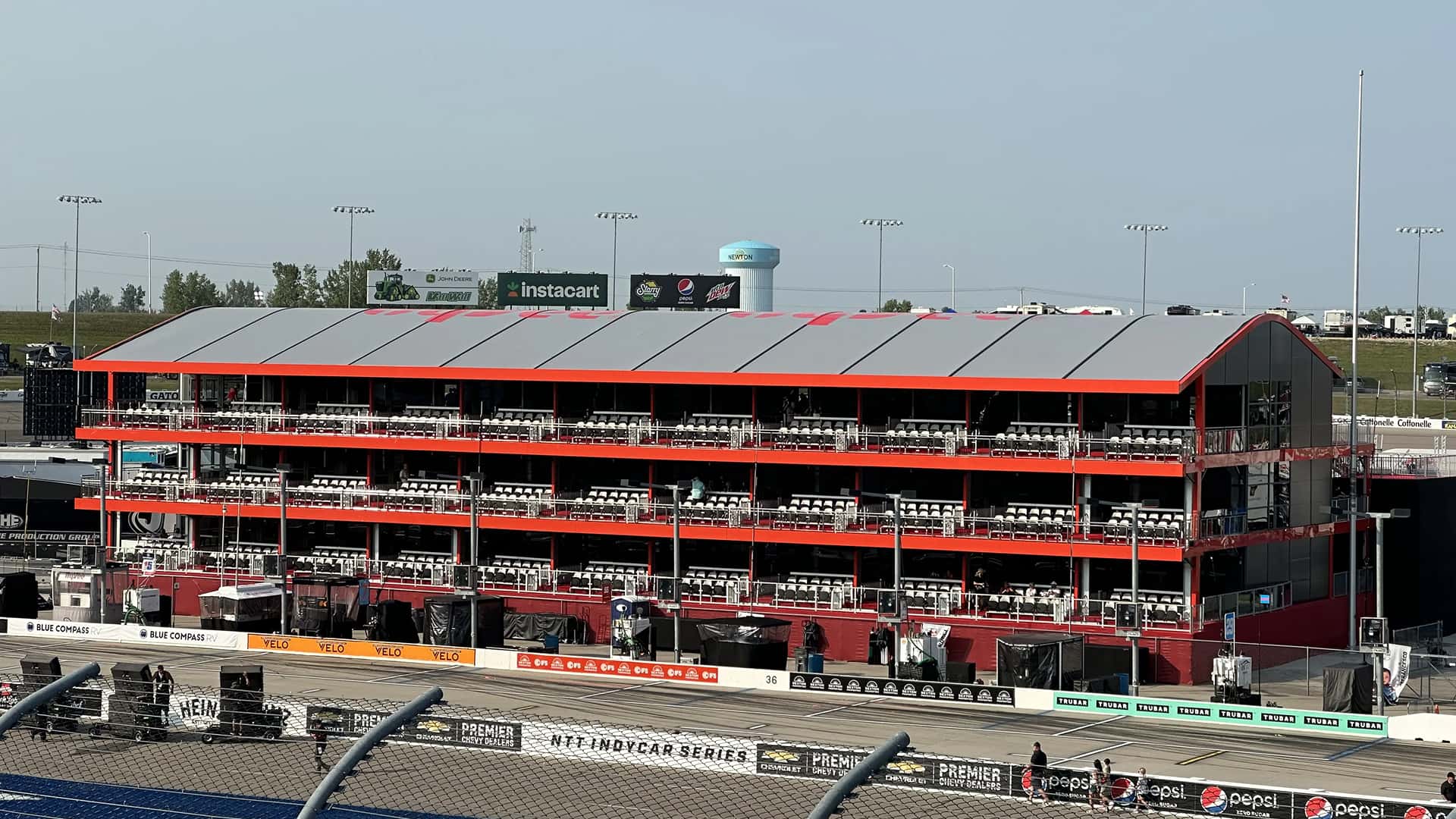
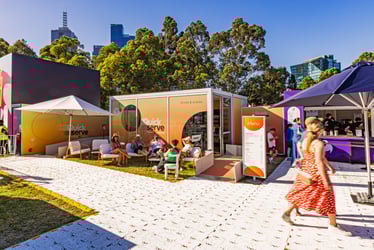
Seating systems move across multiple stops on the same tour. Hospitality structures are reconfigured and adapted for different clients and formats. Platforms are deployed across venues and seasons rather than built fresh for each event.
The goal is not to build once. It is to build systems that can move, adapt, and perform again and again, reducing waste without compromising the experience.
It Starts Early
None of this is solved at install. The ability to reuse, recover, and recycle is determined at the beginning of a project, shaped by decisions around design, logistics, and field coordination.
Teams that plan for reuse early reduce waste without cutting corners on quality, improve efficiency across multiple events because systems are already proven, and deliver consistent environments that clients can count on stop after stop.
Getting there requires a partner who is thinking about the end of the event before the first seat is installed.
The Real Difference
Sustainability in this industry is not about adding something at the end. It is about building a system that works from start to finish, from how materials are selected, to how they are deployed, to how they are recovered and used again.
The difference is not in what is said. It is in what happens after the event ends.
If you are working on an event or a season where reuse and recovery matter, we would be glad to talk through how InProduction approaches it.