

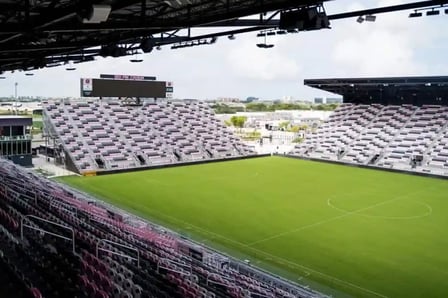
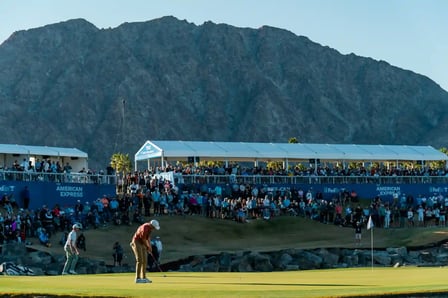
Corporate hospitality has traditionally been shaped by the limitations of the venue.
Teams work with the rooms, terraces, suites, and floor plans already available, then adapt their programs around those spaces. That approach can work when the venue already provides the right environment. It becomes more difficult when an event requires additional capacity, a stronger brand presence, or an experience that the existing footprint was never designed to support.
Modular hospitality changes that equation.
Instead of treating the venue as a fixed limitation, organizers can introduce purpose-built environments around the needs of the event, the brand, and its guests.
Hospitality Has Become Part of the Brand Experience
Corporate hospitality is no longer simply a private place to gather between scheduled activities.
These environments may need to support executive meetings, customer conversations, product demonstrations, dining, presentations, networking, and content creation, sometimes within the same footprint.
They also have to communicate the brand clearly.
Guests should feel that they have entered a space created specifically for the company hosting them, even when the event is taking place inside a convention center, stadium, festival, or other venue the brand does not control.
Conventional temporary structures can provide additional space, but they are not always designed to deliver the finish, flexibility, and spatial experience these programs require.
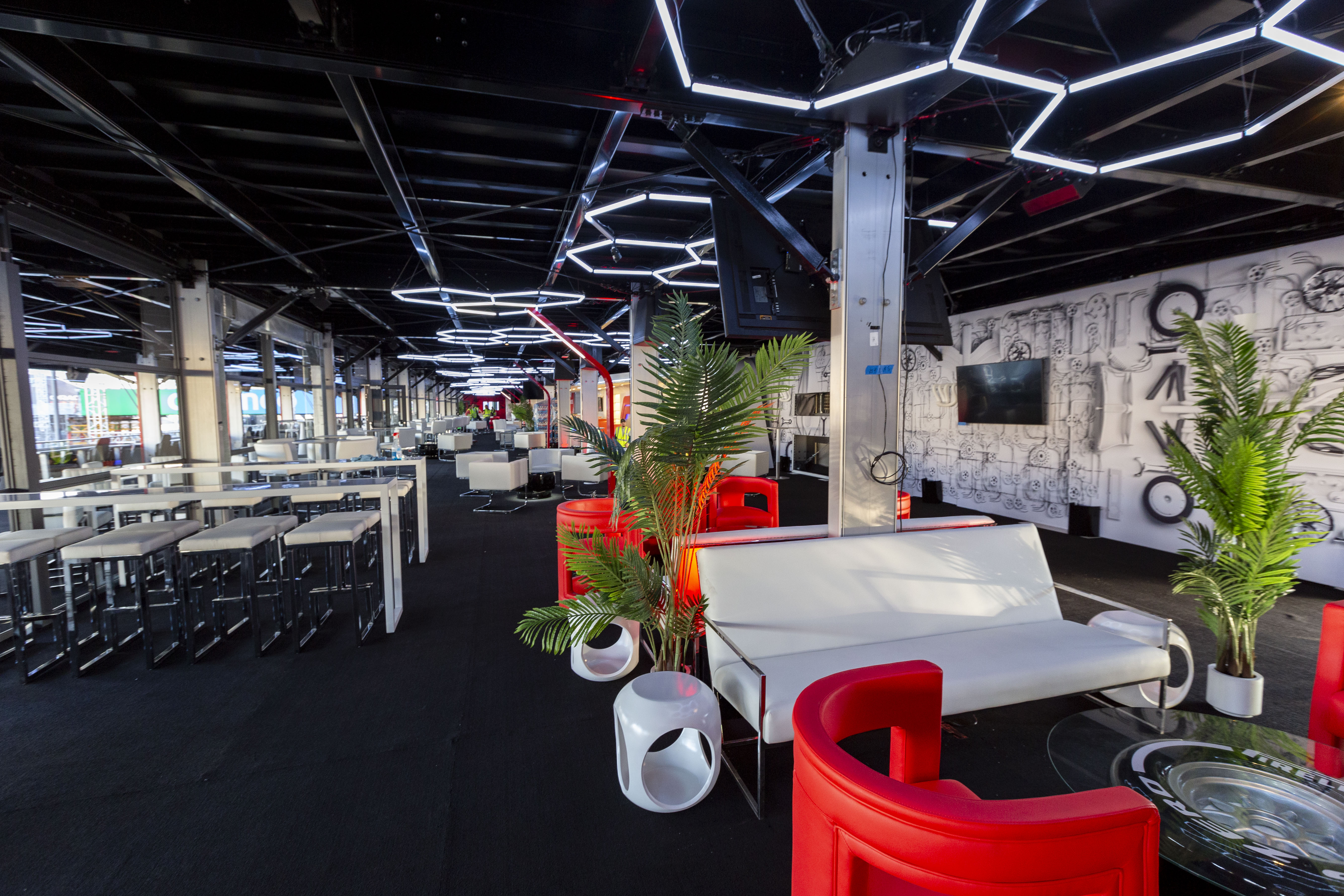
Modular hospitality can create a more complete environment. Multiple levels, open terraces, private meeting rooms, integrated branding, premium interiors, and customer-facing spaces can all be configured around the program.
The result is not simply more square footage. It is hospitality space with a defined purpose.
The Environment Can Be Designed Around the Program
A fixed venue often requires the program to conform to the available rooms.
Modular infrastructure reverses that relationship. The environment can be configured around how the event needs to function.
A team may need an open ground level for product demonstrations, private rooms for meetings, and an upper-level terrace for hospitality. Another event may prioritize presentation space, customer engagement, and clear visibility from the surrounding show floor.
The same modular system can support very different layouts because the structure is planned around the program rather than selected from a standard floor plan.
This is particularly valuable at large conferences and trade shows, where brands are competing for attention within a crowded environment.
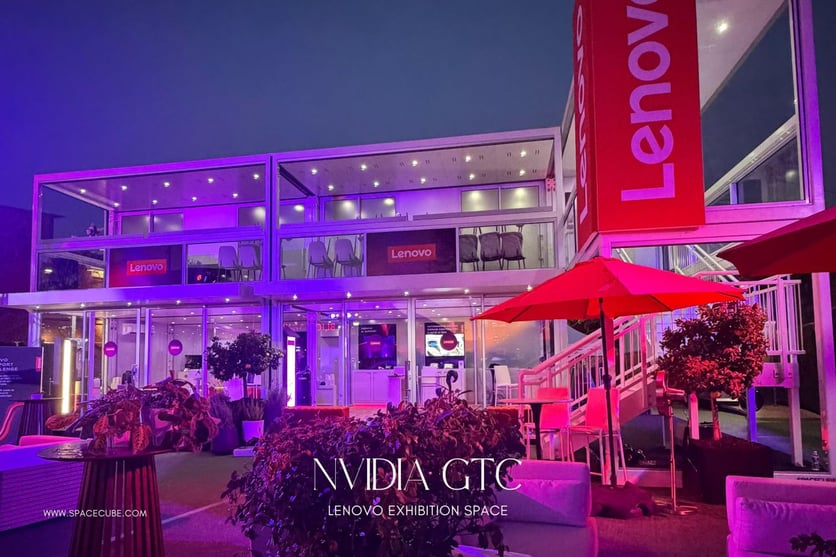
At NVIDIA GTC, SPACECUBE gave Lenovo a defined setting for meetings, hospitality, product demonstrations, and customer engagement. The environment created a clear brand destination while allowing different activities to take place within one cohesive installation.
Modular Does Not Mean Generic
One of the misconceptions surrounding modular infrastructure is that repeatable systems produce identical environments.
The system may be repeatable, but the experience does not have to be.
Cladding, graphics, lighting, interiors, furnishings, layouts, and architectural details can be customized around the brand and the event. Modules can be combined vertically or horizontally, creating anything from an intimate hospitality suite to a multilevel destination.
This balance between a proven structural system and a customized guest environment is one of the reasons modular hospitality is becoming more relevant for corporate events.
Brands gain the reliability of an engineered system without sacrificing identity.
Temporary Space Can Still Feel Permanent
Guests should not have to lower their expectations because an environment is temporary.
A well-designed modular hospitality structure can provide the finishes, comfort, and functionality associated with permanent construction while remaining removable and adaptable.
That distinction matters for companies hosting high-value customers, partners, executives, and media. The environment becomes part of how the organization presents itself.
Floors should feel stable. Interiors should feel finished. Climate, acoustics, accessibility, sightlines, and circulation should be considered from the beginning. Branding should be integrated into the environment rather than added as a final decorative layer.
When these elements are addressed together, the temporary nature of the structure becomes largely invisible to the guest.
The Investment Can Extend Beyond One Event
Corporate event teams are also under pressure to make infrastructure investments work harder.
A conventional custom build may be designed for one appearance and discarded after the event. Modular hospitality can be reconfigured and reused across different programs, venues, and markets.
The footprint may change. The interior program may evolve. Graphics and finishes may be updated. The underlying system can continue to support the brand across multiple events.
That creates opportunities for greater consistency while reducing the need to begin from zero every time.
More Control Over the Experience
The central advantage of modular hospitality is control.
Brands gain more influence over where hospitality is located, how guests move through it, what activities it supports, and how the environment represents them.
For corporate event teams, that flexibility opens new possibilities. A venue that lacks premium space can gain it. A convention floor can include a complete hospitality destination. An outdoor event can offer the comfort and finish expected from an indoor environment.
The venue still provides the setting, but it no longer has to define the limits of the experience.