
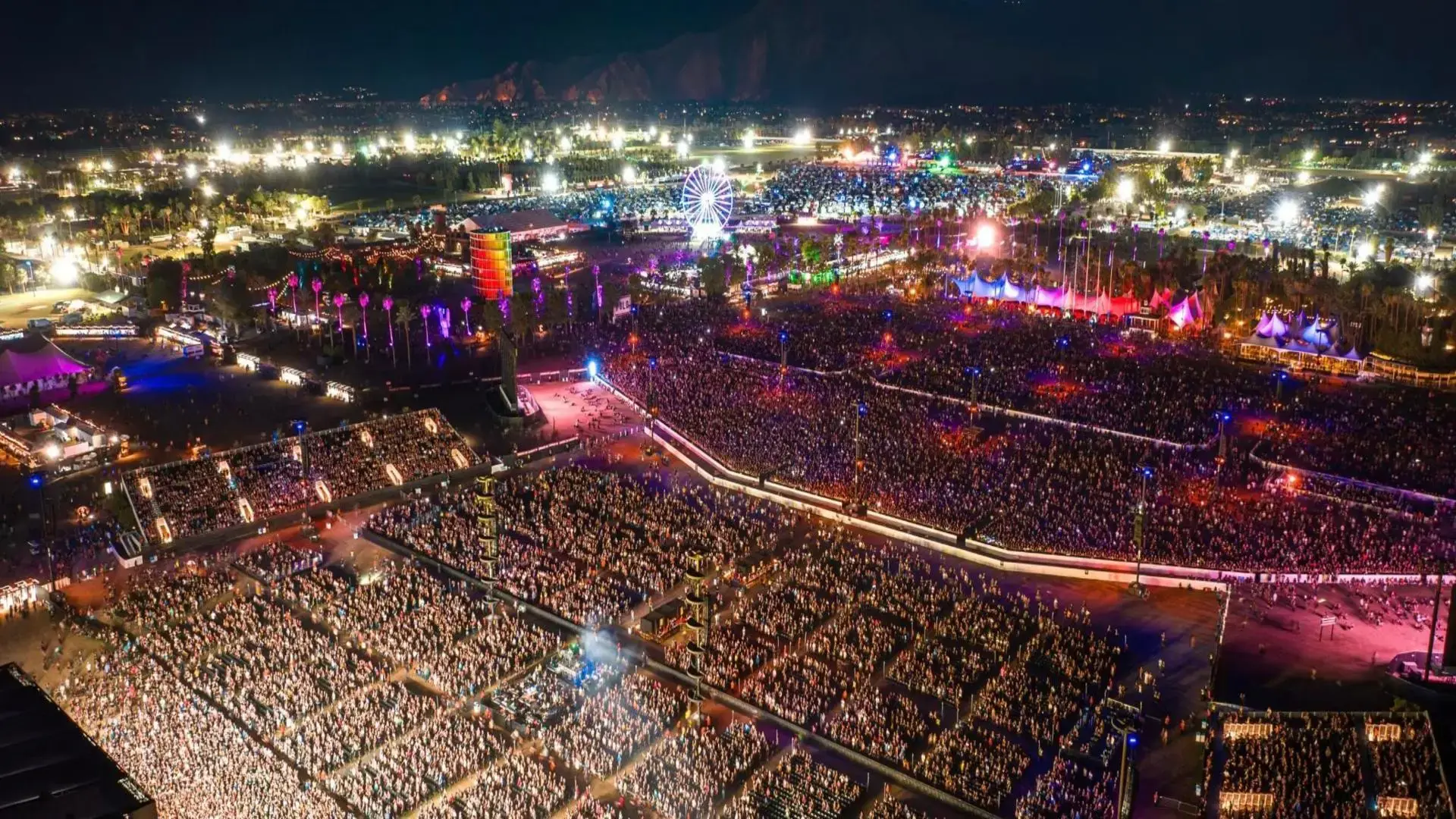
Live entertainment operates on compressed timelines.
Tours move between cities in a matter of days. Festivals transform open land into fully functioning venues. Stadiums convert from sports environments to concert destinations, then return to their regular programming almost immediately afterward.
In each case, the time available to build, adjust, and remove event infrastructure is limited.
Speed matters, but not simply because the doors need to open on time. It affects how much flexibility organizers have, how effectively production teams can respond to change, and how quickly a venue can return to its next use.
The Calendar Does Not Pause for the Build
A live event rarely has unlimited access to its venue.
A stadium may have another game scheduled days after a concert. A festival site may remain in public use until shortly before installation begins. A tour may arrive with a narrow window for load-in, rehearsals, and final inspections.
The infrastructure has to work within that schedule.
Seating, hospitality, platforms, pedestrian bridges, and supporting structures must be installed efficiently while leaving enough time for production teams to complete their own work. Delays in one area can quickly affect staging, technology, branding, food and beverage, security, and guest operations.
An efficient build gives every team more time to prepare the environment before guests arrive.
Faster Does Not Mean Rushed
Speed is valuable only when it is supported by planning.
Engineering, code compliance, site access, ground conditions, logistics, and installation sequencing all need to be resolved before work begins. A structure that can be assembled quickly still requires a detailed understanding of where it will sit, how people will move around it, and how it connects to the rest of the event.
The objective is not to make decisions at the last minute. It is to make the right decisions early enough that execution can move quickly once the installation window opens.
Modular infrastructure supports that process because systems can be engineered and prepared in advance, then configured for the specific venue and event. This reduces the amount of work that has to happen on-site without treating every environment as interchangeable.
Live Events Continue to Change
Even the most carefully planned production can evolve.
Attendance expectations may shift. A new sightline issue may emerge. Weather may affect the site. Hospitality requirements may expand. Safety or circulation plans may need to be adjusted as the full environment comes together.
When timelines are already compressed, the ability to respond becomes critical.
Flexible infrastructure gives organizers more options when conditions change. Seating sections can be adjusted. Platforms and hospitality areas can be repositioned. Additional structures can be integrated without restarting the entire process.
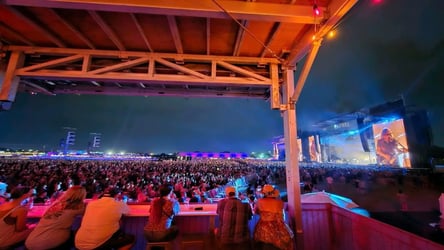
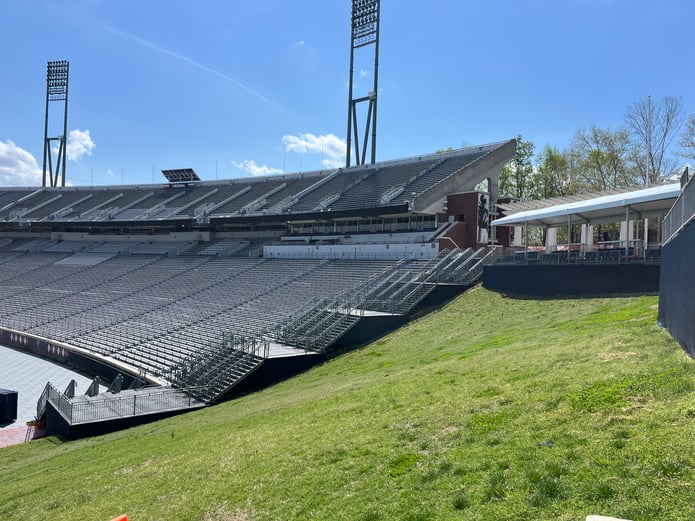
At Scott Stadium, preparations for Luke Combs’ concert included expanding the field to accommodate thousands of additional fans. As production plans and safety requirements evolved, the infrastructure plan had to evolve with them.
Speed made it possible to respond while keeping the larger event schedule moving.
Turnaround Is Part of the Event Plan
The work does not end when the audience leaves.
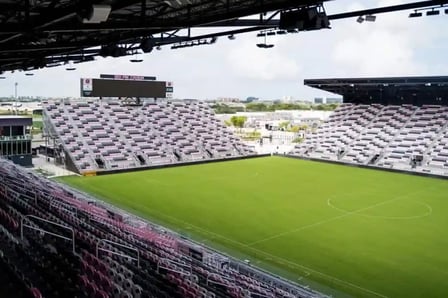
Many venues have only a short period to remove temporary infrastructure, restore the site, and prepare for the next event. A football stadium converted for a concert still has to become a football stadium again. A public space used for a festival may need to reopen quickly. A temporary venue may have to disappear entirely.
That turnaround should be considered from the beginning.
Infrastructure designed for efficient removal reduces disruption to the venue and helps protect the next event on the calendar. It also gives venues greater confidence in hosting productions that require significant temporary changes.
The faster and more predictably a site can transition, the more ways it can be used.
Speed Creates More Opportunity
For venues, speed can create additional programming opportunities by reducing the amount of time required between events.
For organizers, it creates more room for production, testing, and refinement.
For guests, it creates an environment that feels complete, regardless of how quickly it came together.
The most effective live entertainment infrastructure is not simply assembled quickly. It is planned, engineered, and delivered in a way that keeps the entire production moving.
In a calendar where every day matters, speed is not just an installation advantage. It is part of what makes the event possible.